
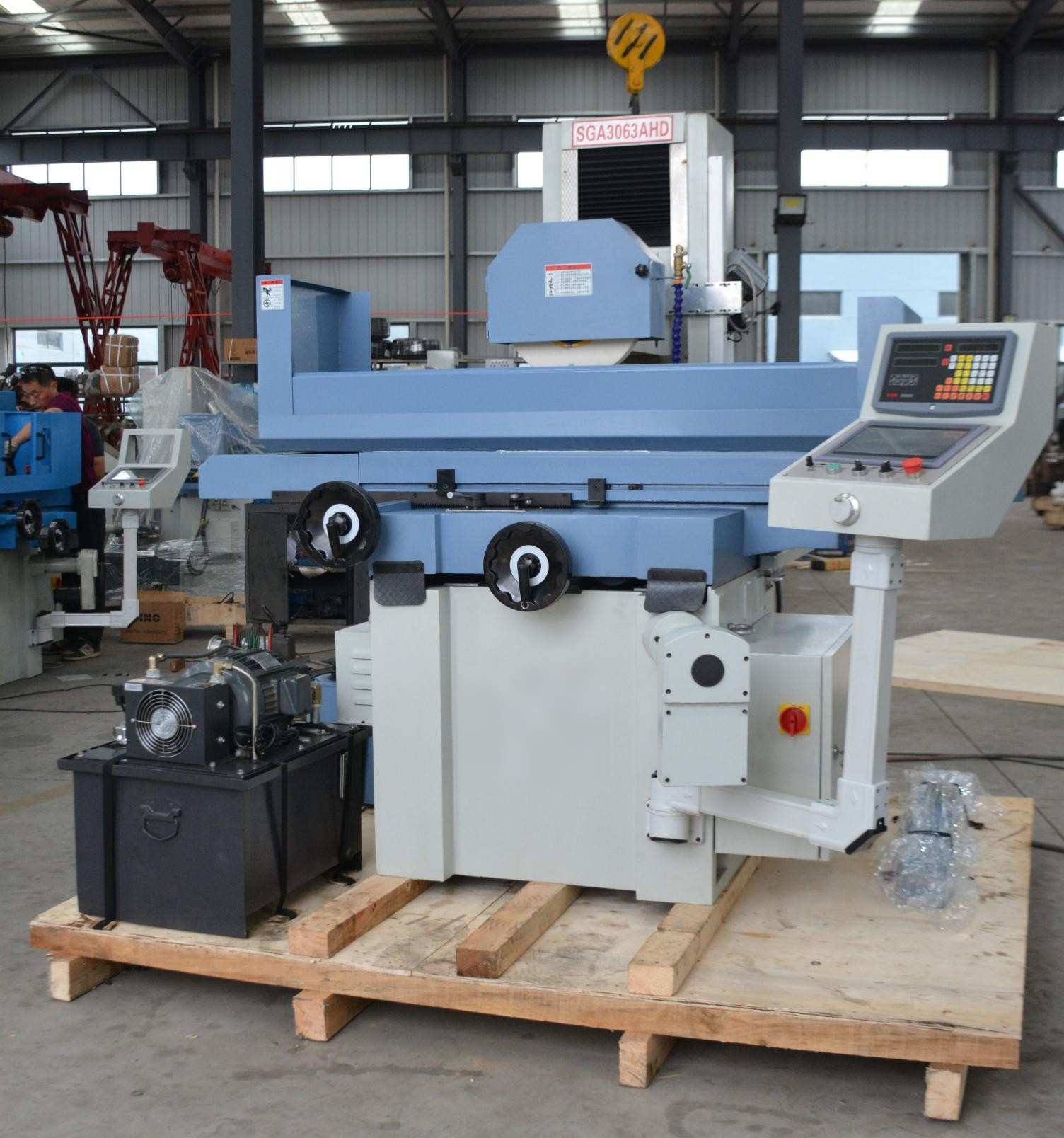
El rectificadora de superficies totalmente automática Su base, columna y corredera están fabricadas en hierro fundido gris de alta resistencia, lo que proporciona una rigidez estructural excepcional para suprimir las vibraciones y mantener una planitud de mecanizado estable. Incorpora una estación hidráulica independiente y un sistema de control táctil GS-PLC, junto con una mesa de trabajo electromagnética estándar, ideal para el rectificado plano de precisión de moldes y piezas mecánicas con una excelente relación calidad-precio.
Los ejes X e Y están equipados con guías recubiertas de plástico para eliminar el deslizamiento intermitente a baja velocidad. La mesa longitudinal utiliza guías compuestas planas en V, mientras que el carro transversal adopta guías de doble V, lo que garantiza una carga fiable y una excelente resistencia al desgaste. El husillo está equipado con rodamientos de precisión precargados sin holgura para una producción de rectificado constante. La unidad hidráulica independiente incluye un intercambiador de calor integrado para controlar la acumulación de temperatura, eliminando la deformación térmica y la vibración durante la producción continua prolongada.
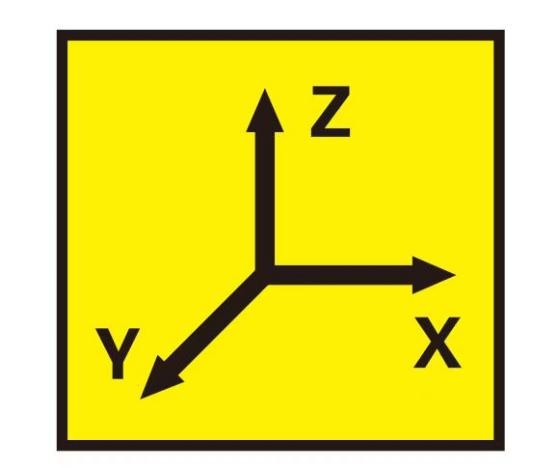
1. Sistema de movimiento de tres ejes
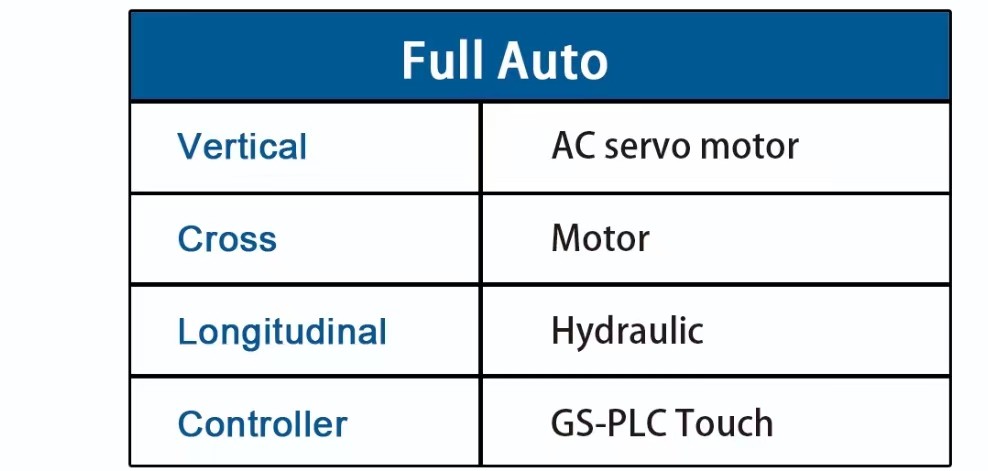
La máquina sigue una configuración estándar de tres ejes XYZ con diseños de accionamiento diferenciados para cada eje:
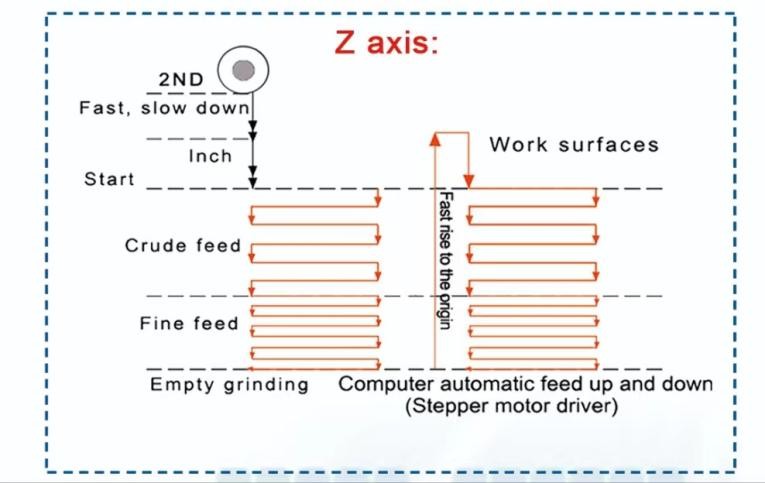
Eje Z (Eje de avance vertical)
El eje Z, accionado por un servomotor de CA, es el elemento central del rectificado cíclico automático. Permite un rápido desplazamiento vertical y un avance fino ajustable para controlar con precisión la profundidad de rectificado.
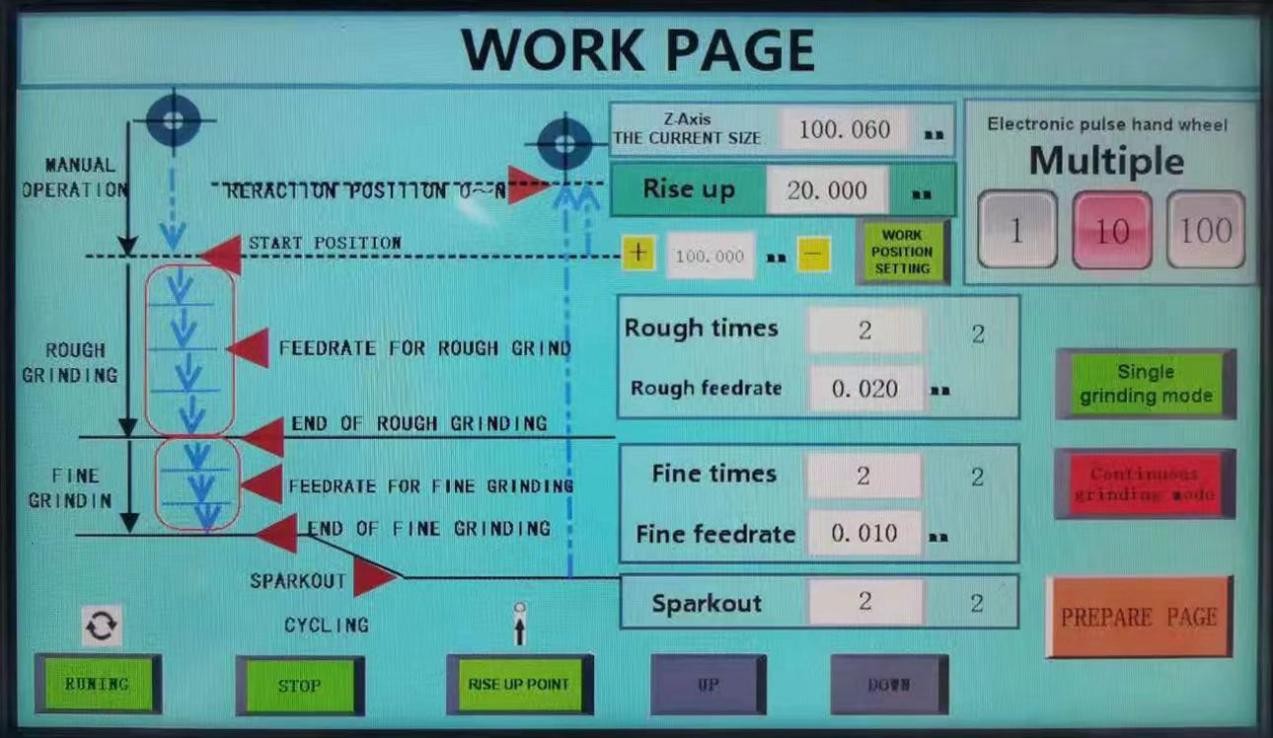
El ciclo de rectificado automático del eje Z funciona de la siguiente manera: la muela desciende rápidamente y reduce la velocidad al acercarse a la pieza, para luego realizar un desbaste, un rectificado fino y un acabado por chispa. Una vez finalizado el ciclo, el cabezal de rectificado vuelve automáticamente a la posición inicial, y todos los pasos del proceso se pueden configurar mediante la pantalla táctil.
Eje Y (Eje transversal)
El eje transversal accionado por motor permite el avance alternativo automático y el ajuste fino manual mediante un volante, lo que posibilita un ajuste flexible de la eliminación lateral del material.
Eje X (Eje longitudinal)
La mesa longitudinal de accionamiento hidráulico proporciona un movimiento alternativo suave para cubrir toda la superficie. Los topes de seguridad están instalados en ambos extremos para evitar colisiones accidentales.
2. Sistema operativo de control mediante pantalla táctil
La máquina está equipada con el controlador táctil Samsys SMART-panel IE V3, que permite configurar los parámetros de forma totalmente visual, sin necesidad de una programación compleja.
Los operarios pueden configurar libremente los parámetros de rectificado de núcleos: ciclos de rectificado basto y profundidad de avance, ciclos de rectificado fino y profundidad de avance, y tiempos de acabado por chispa. Admite la activación electrónica del volante para un posicionamiento manual preciso, así como modos de rectificado de ciclo único y continuo. Los botones de EJECUTAR y PARAR, de un solo clic, simplifican el funcionamiento rutinario.
3. Ventajas principales del producto
Las guías con revestimiento de baja fricción y la estructura de guía reforzada tipo V proporcionan una capacidad de carga estable y una larga vida útil.
El conjunto de cojinetes del husillo precargados reduce la excentricidad del husillo, logrando un acabado superficial uniforme en piezas de trabajo de acero, aleación de aluminio y hierro fundido.
El sistema de refrigeración hidráulica independiente estabiliza el movimiento de la mesa y evita la deformación dimensional por cambios de temperatura durante un funcionamiento prolongado.
El eje Z controlado por servomotor permite un control de profundidad a nivel micrométrico, lo que resulta ideal para el rectificado de componentes ultrafinos de alta precisión.
La doble protección mecánica y por software limita el recorrido, evitando así la colisión entre la muela abrasiva y los accesorios.
4. Accesorios estándar
Pantalla táctil Samsys SMART, volante electrónico, muela abrasiva y brida, lámpara de trabajo LED, mandril magnético, herramientas de equilibrado de muelas, rectificador paralelo, cubiertas protectoras de seguridad, desmagnetizador, unidad de circulación de refrigerante, herramienta de rectificado de diamante, patas de nivelación de la máquina, sistema de lubricación central y juego completo de herramientas de servicio.
Preguntas frecuentes
P1: ¿Qué tipo de piezas puede procesar esta rectificadora?
A1: Procesa metales ferrosos como el acero y el hierro fundido, así como materiales no ferrosos como la aleación de aluminio. Se utiliza ampliamente para placas de moldes, piezas delgadas de precisión y componentes mecánicos estándar.
P2: ¿Cuál es la ventaja de usar un servomotor en el eje Z?
A2: El servomotor logra una resolución de avance vertical ultrafina, lo que garantiza una eliminación uniforme del material durante el rectificado grueso y fino, lo que mejora enormemente la precisión de la planitud en piezas delgadas.
P3: ¿Qué papel juega el rectificado de chispas?
A3: Durante el rectificado por descarga eléctrica no se aplica avance vertical. Esto elimina las líneas de rectificado residuales y libera las tensiones internas de mecanizado, reduciendo eficazmente la deformación de la pieza tras la desmagnetización y la descarga.
P4: ¿Cómo evitar colisiones durante el procesamiento automático?
A4: Se han instalado topes mecánicos en los recorridos X e Y. Los operarios también pueden establecer límites de movimiento seguros en la pantalla táctil para restringir el rango de movimiento de la mesa y así lograr una doble protección.
Dejar un mensaje
Escanea y envíalo a WeChat/WhatsApp. :